active directory AI Career Growth Database Development Information Security Linux Microsoft Networking Tools Guides
-
Starting a small business means building something worth protecting. That could be customer trust, online sales, invoices, appointments, employee information, or the tools that keep your doors open. Cybersecurity is not just for large companies. A successful phishing email, stolen password, failed hard drive, or ransomware infection can stop a small business cold. The goal…
-
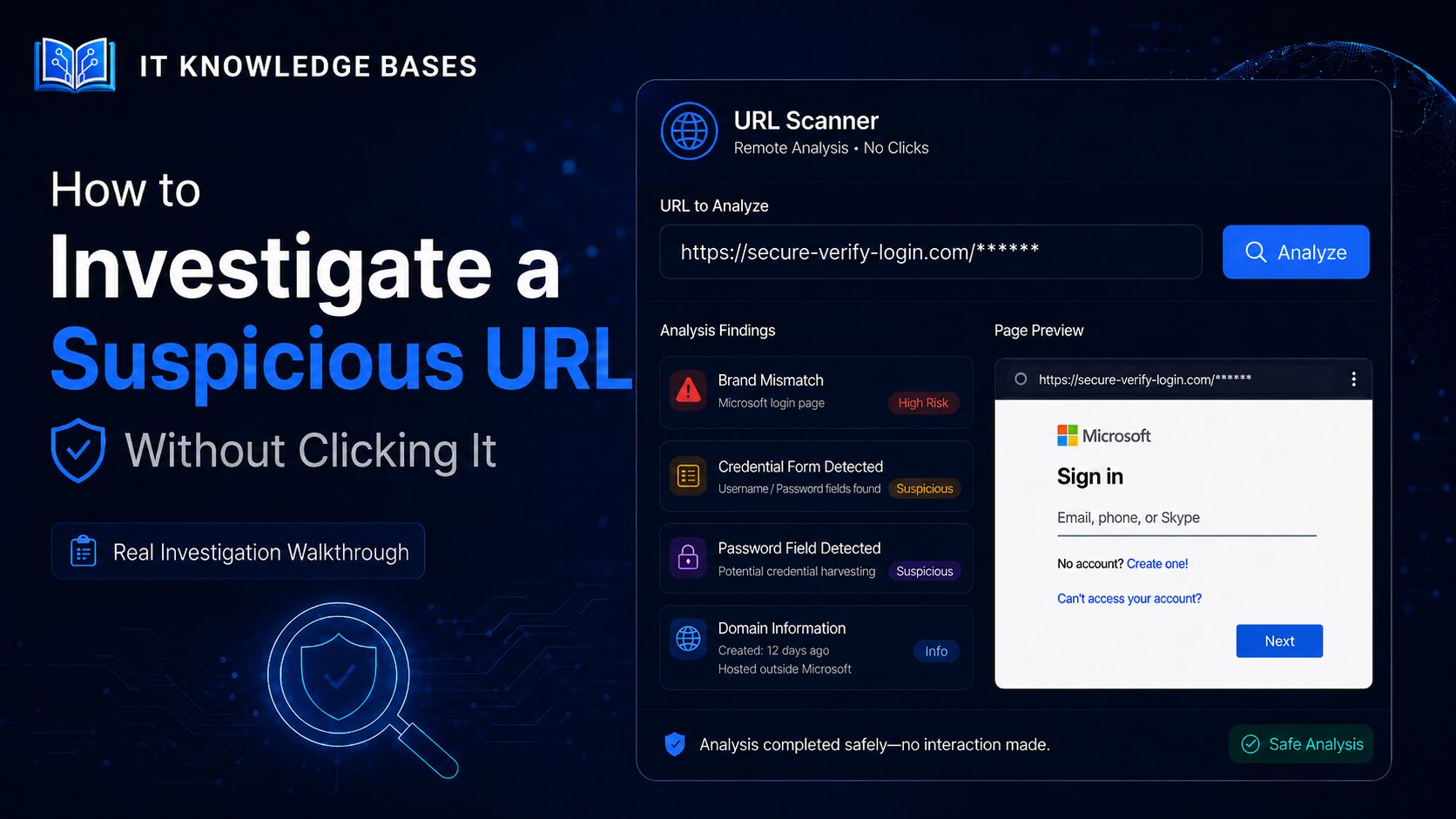
A real-world walkthrough showing how a Microsoft-branded credential-phishing page was identified through remote screenshots, password-field detection, domain analysis and brand-mismatch findings. Important: Do not open a suspicious URL directly from your normal workstation just to see where it goes. Investigate it remotely, preserve the original evidence and avoid entering credentials. Investigation steps Review the investigation…
-
Microsoft’s July 2026 Windows security updates remove the temporary rollback option for its Kerberos RC4 hardening changes. Active Directory environments that still depend on RC4 for service-ticket issuance may experience authentication failures after updated domain controllers enter full enforcement. The problem is that many administrators do not know whether their environment still uses RC4. A…
-
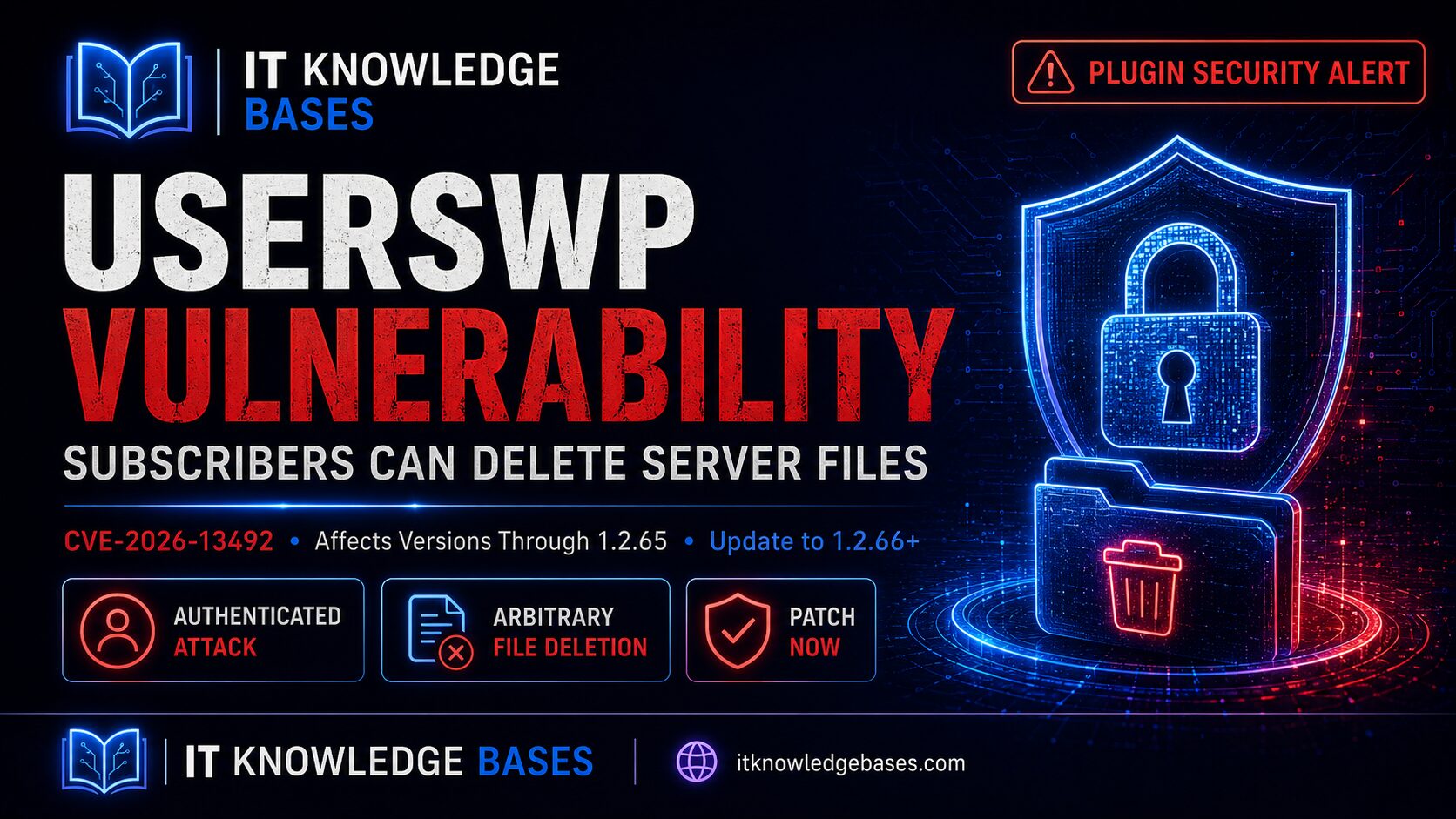
WordPress Security Advisory A high-severity vulnerability in the UsersWP WordPress plugin could allow an authenticated attacker with a basic Subscriber-level account to delete files from the affected website’s server. UsersWP versions through 1.2.65 are vulnerable. Severity High CVSS 8.8 Affected ≤ 1.2.65 Fixed 1.2.66+ Immediate action: Update UsersWP to version 1.2.66 or later. Version 1.2.66…
-
Credential Supply Chain Self-Assessment Checklist Printable PDF checklist for reviewing exposed credentials, development secrets, cloud access, CI/CD pipelines, and supply-chain security gaps. Secret management CI/CD checks Cloud credential audit Third-party access IR validation Preview PDF Download PDF Accenture has confirmed it handled an isolated security incident after a threat actor using the alias 888 claimed…
-
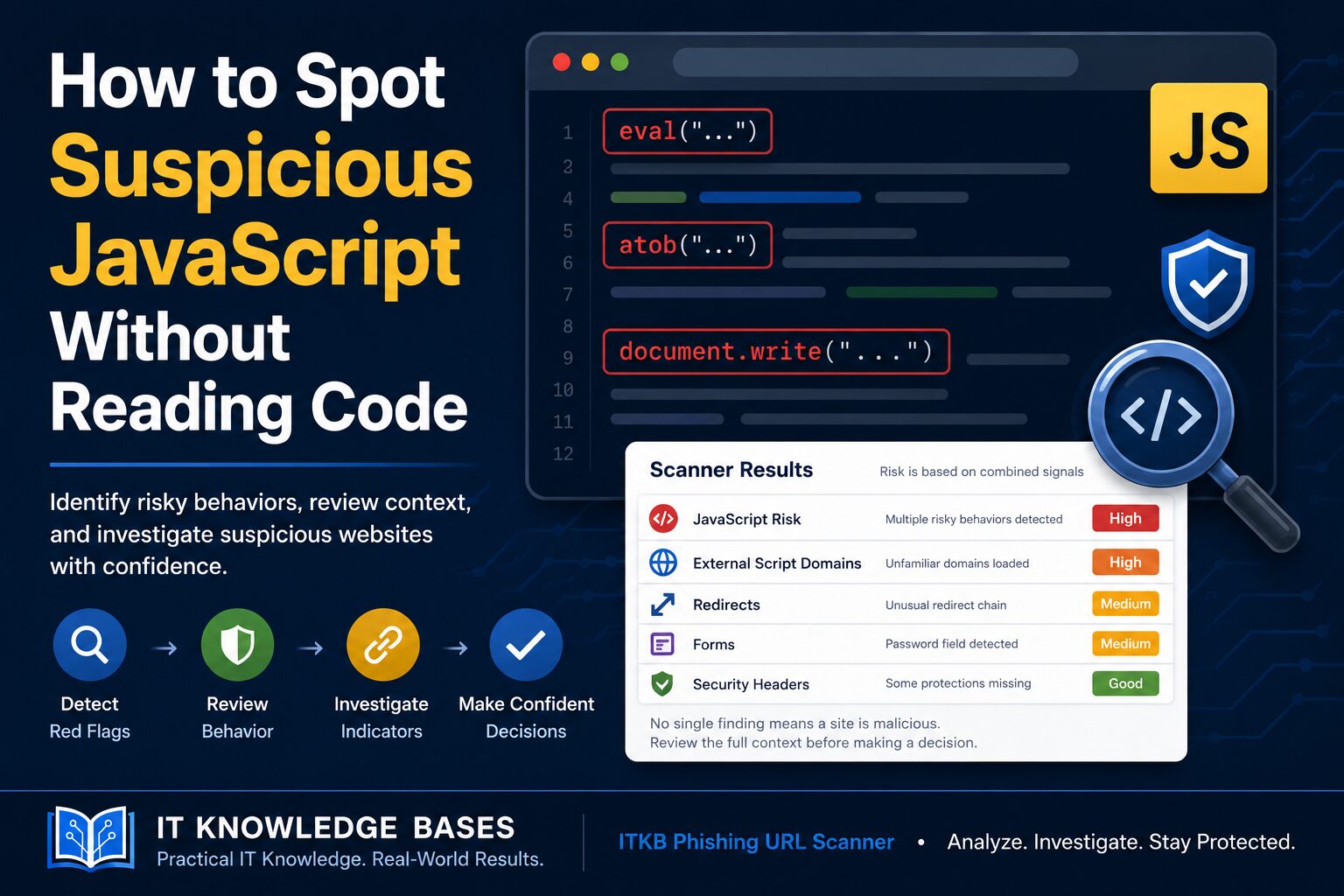
TL;DR: Suspicious JavaScript is usually identified by behavior, not by reading every line of code. Look for signals such as eval(), atob(), dynamic script injection, obfuscated scripts, unexpected redirects, and unfamiliar third-party domains. One signal alone does not prove a site is malicious, but several together should trigger deeper review before entering credentials or trusting…
-
Summary: IT troubleshooting notes are useful, but they can become a security problem when passwords, API keys, customer information, tokens, or incident details are copied into the wrong place. This guide explains how to take temporary IT notes safely and when to use the IT Knowledge Bases Temporary Notepad Browser Extension. IT work moves fast.…
-
Summary: A suspicious login IP address is worth investigating, but an unfamiliar location does not automatically mean an account was compromised. IP geolocation is useful for triage, but it should be combined with ASN, device, authentication, impossible travel, DNS, RDAP, VPN, and user-context checks before taking action. Security teams see this problem constantly: a user…
-
If your WooCommerce store uses the Booster for WooCommerce plugin, check its version now. CVE-2026-56027 is a critical arbitrary-file-upload vulnerability affecting Booster for WooCommerce version 8.0.1 and earlier. The vulnerability can be reached by an authenticated customer account—the same basic account type that many WooCommerce stores allow visitors to create automatically. Required action: Update Booster…
-
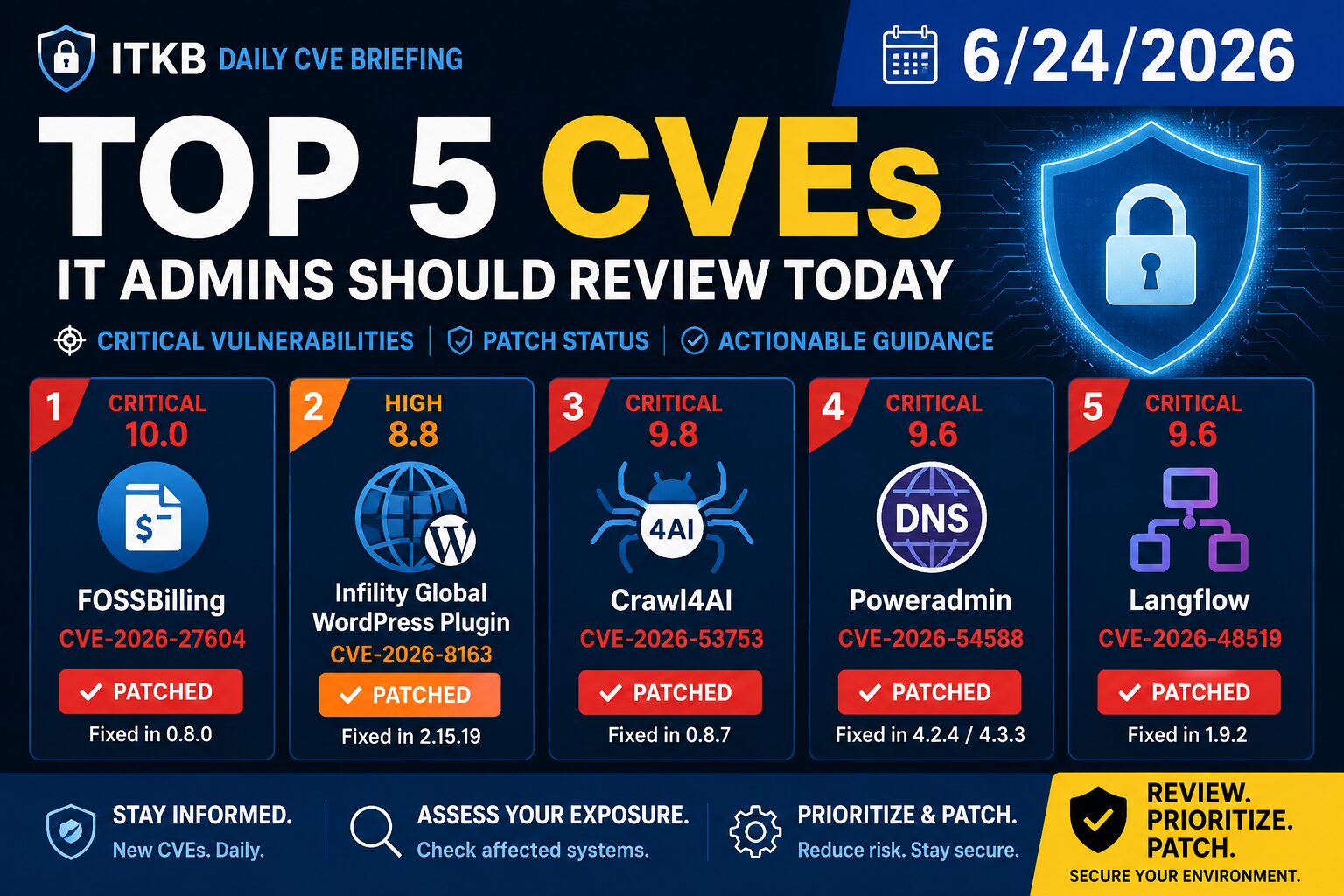
Top 5 CVEs IT Admins Should Review Today — June 24, 2026 Top CVEs are selected based on severity, patch status, affected product clarity, and practical remediation value. Rather than simply listing vulnerabilities, this roundup explains why they matter from both an attacker’s and defender’s perspective so IT administrators can better prioritize remediation efforts. Feed…